
Choosing the Right Metal for Your Custom Piece
When designing a custom jewelry piece, one of the most important decisions you’ll make is the type of metal. Beyond appearance, your choice affects durability, maintenance, cost, and how the piece will age over time. From 10K to 18K gold to platinum, and from white to yellow tones, each option offers something unique.
Understanding these differences will help you create a piece that not only looks beautiful—but lasts for generations.
Gold jewelry is rarely made from pure gold because pure gold (24K) is too soft for everyday wear. Instead, it’s mixed with other metals to increase strength.
10K Gold (41.7% gold):
This is the most durable and affordable option. Because it contains a higher percentage of alloy metals, it’s more resistant to scratches and wear. However, it has a slightly paler gold color and may be less hypoallergenic.14K Gold (58.3% gold):
A popular balance between durability and richness in color. It’s strong enough for daily wear while still offering a warm, classic gold appearance. This is often considered the “sweet spot” for engagement rings and fine jewelry.18K Gold (75% gold):
Rich in color and more luxurious in appearance, 18K gold has a deeper yellow tone. However, it’s softer than 10K and 14K, meaning it may scratch more easily and require a bit more care.
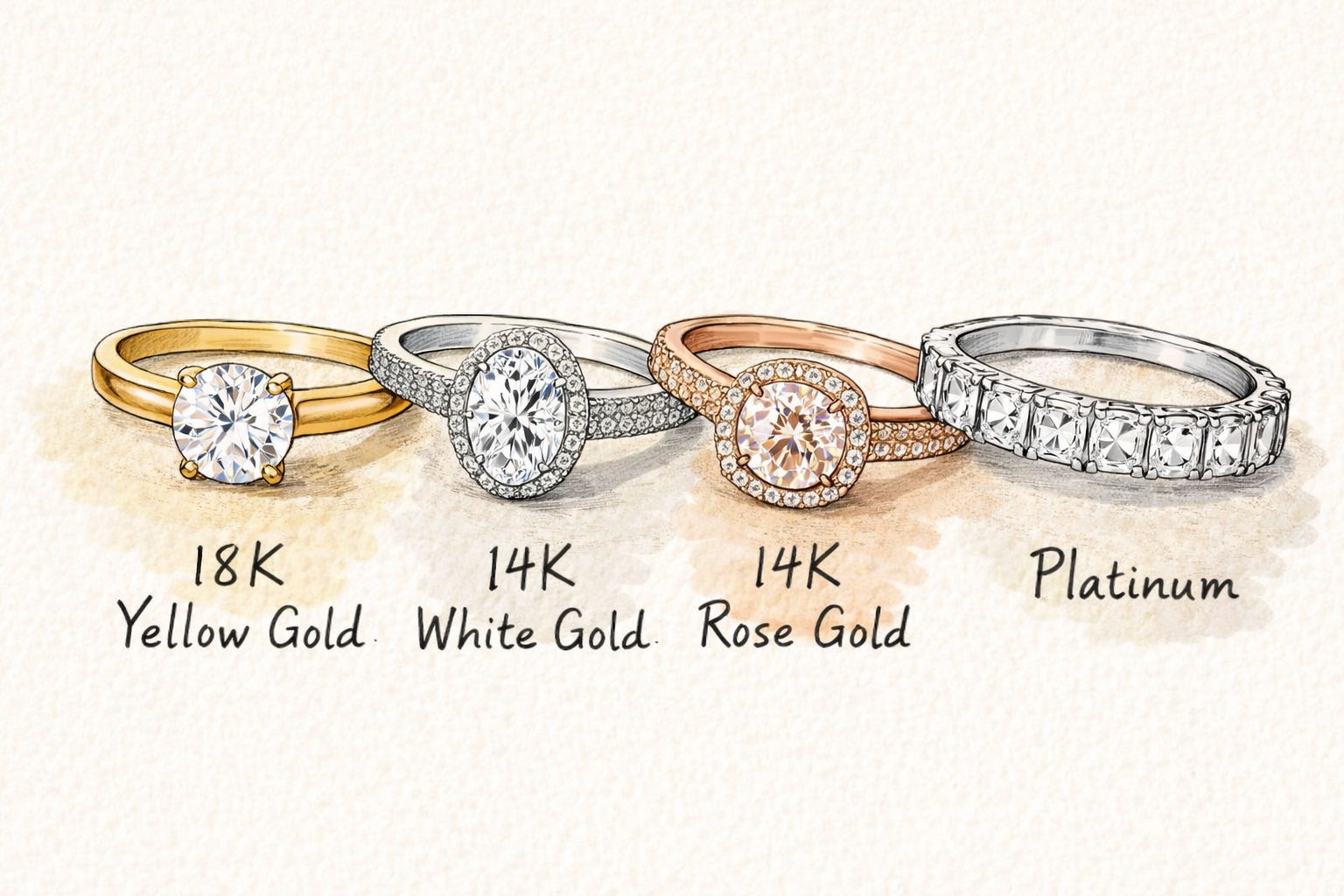
Color plays a big role in both style and maintenance.
Yellow Gold:
Classic, timeless, and low-maintenance. It doesn’t require plating and maintains its color over time. Scratches can occur, but they blend naturally into the metal’s tone.White Gold:
Sleek and modern, white gold is typically coated with rhodium to achieve its bright, silvery finish. Over time, this plating wears off and needs to be reapplied (usually every 1–2 years, depending on wear). Without maintenance, it may develop a slightly yellow tint.Platinum:
Platinum is often considered the pinnacle of fine jewelry metals. It’s naturally white, so it doesn’t require plating like white gold. It’s also denser and heavier, giving it a luxurious feel. One of its standout qualities is durability—while it can scratch, it doesn’t lose material. Instead, it develops a soft patina over time, which many people love for its antique look. Platinum is also hypoallergenic, making it ideal for sensitive skin.
Long-Term Maintenance: What to Expect
No matter which metal you choose, all fine jewelry benefits from proper care.
Gold (10K, 14K, 18K):
May need occasional polishing to remove scratches. White gold requires rhodium replating to maintain its color.Platinum:
Develops a patina over time. It can be polished back to a shine, but many people choose to keep its natural aged look.General Care Tips:
Remove jewelry during heavy activity, avoid harsh chemicals, and schedule professional cleanings to maintain brilliance and structure.
Your choice ultimately depends on your lifestyle, aesthetic preference, and budget. If you want durability and affordability, 10K or 14K gold may be ideal. If you’re drawn to rich color and luxury, 18K gold offers a beautiful option. For those seeking longevity, hypoallergenic properties, and a naturally white finish, platinum stands out.
A custom piece is more than just design—it’s about creating something that fits seamlessly into your life. The right metal ensures your jewelry not only looks stunning today but continues to tell your story for years to come.